
Last Updated: October 25, 2026
Quick Summary
Camper hire remote travel requires a 4WD vehicle with high ground clearance, fuel tank capacity of at least 100 litres, and unlimited kilometres to handle unsealed roads and vast distances between service stations. Match your vehicle to your planned route, confirm road access in your rental agreement, and budget for fuel consumption of 14-18 litres per 100 kilometres on rough terrain.
- A 4WD camper with high clearance and low-range gearing is the minimum for genuine remote routes; two-wheel-drive vehicles get stuck on sand, mud and corrugated tracks.
- Unlimited kilometres is essential for remote travel; a week in the Pilbara easily exceeds 2,000 kilometres, making per-kilometre charges prohibitively expensive.
- Many rental agreements exclude specific roads such as the Gibb River Road, Oodnadatta Track and Birdsville Track; confirm your planned route is permitted in writing before booking.
- Budget for fuel at 14-18 litres per 100 kilometres on rough roads, plus one-way fees, insurance excess, campsites and a contingency fund of several hundred dollars for unexpected repairs.
- Carry a satellite communicator, first aid kit, emergency beacon, paper maps, extra fuel in jerry cans and non-perishable food for at least three days beyond your planned trip.
Table of Contents
- Selecting the Right Vehicle for Remote Camper Hire
- Understanding Campervan Hire with Unlimited Kilometres
- Driving on Unsealed Roads in a Hire Camper
- Building Your Remote Road Trip Checklist
- Managing Costs Beyond the Daily Hire Rate
- Booking Your Remote Camper Hire Trip
- Frequently Asked Questions
Selecting the Right Vehicle for Remote Camper Hire
Planning a camper hire remote travel adventure starts with the right vehicle. A standard two-wheel-drive campervan works fine on sealed highways, but for Karijini or Ningaloo you need something built for unsealed roads and genuine isolation.
At Bonito Camper, vehicle selection makes or breaks a remote trip. Browse all available camper vehicles to compare options for your remote travel.
What matters most in remote terrain:
- Ground clearance, Unsealed roads have ruts, rocks, and washouts. Higher clearance prevents damage to fuel tanks and undercarriage.
- Traction control, 4WD gives you grip on sand and gravel. Two-wheel-drive gets stuck.
- Fuel tank capacity, Remote areas mean longer distances between fuel stops. A 100-litre tank beats a 60-litre tank when the next petrol station is 300 kilometres away.
- Water and power systems, You’ll need fresh water storage and reliable batteries for camping off-grid.
- Suspension, Rough roads punish soft suspension. Heavy-duty setups absorb corrugations without jarring passengers.
Vehicle size shapes your experience too. A compact camper fits narrow tracks; a larger motorhome offers comfort but limits where you can go. Families often prefer a six-berth camper despite tighter manoeuvring.
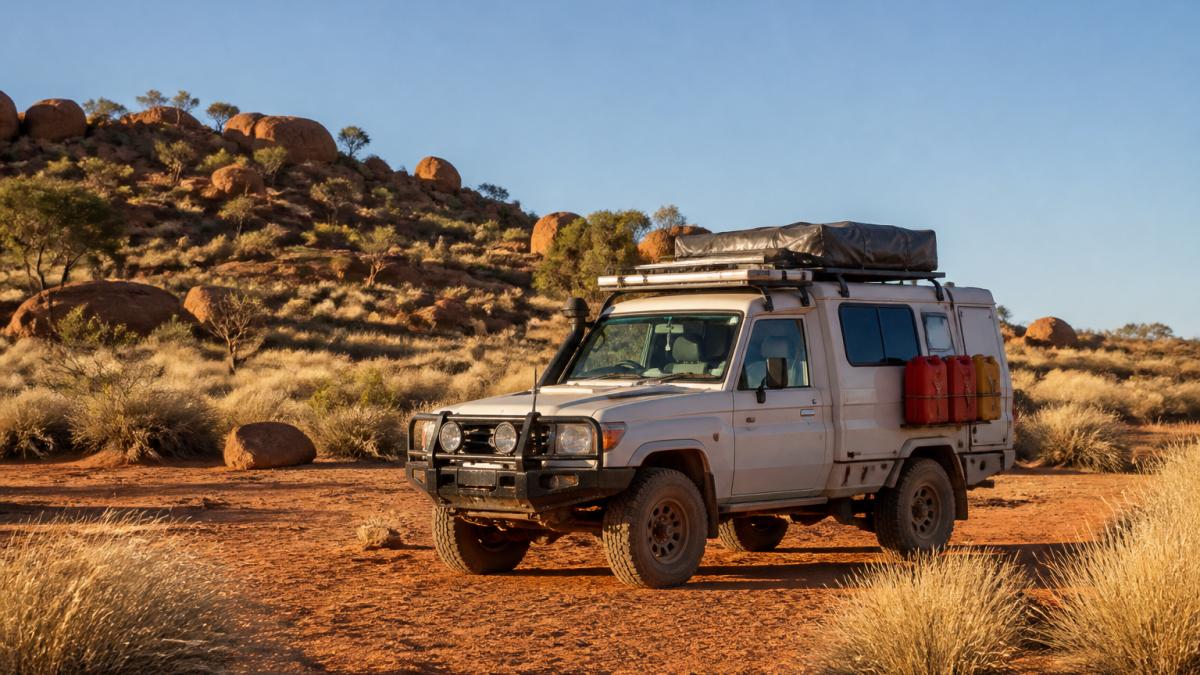
Consider your group size: a couple might choose a compact sleeper van for agility, while a family of five needs bunks and a functional kitchen. The right fit depends on comfort expectations and how much rough terrain you’ll tackle.
Understanding Campervan Hire with Unlimited Kilometres
One of the biggest cost surprises in camper hire is kilometre limits. Some companies charge per kilometre after a daily allowance; others cap total distance per rental period.
Unlimited kilometres changes the equation: one daily rate, drive as far as you need, no surprise charges.
For remote travel, unlimited kilometres is essential. A day trip from Perth to Karijini covers 600 kilometres return; a week in the Pilbara easily exceeds 2,000. Paying per kilometre adds hundreds to your final bill.
When comparing campervan hire options, ask directly about kilometre policies:
- Does the daily rate include unlimited kilometres?
- If not, how many free kilometres come with each day?
- What’s the charge per extra kilometre?
- Are there caps on total distance per rental period?
Some providers bundle unlimited kilometres into their standard rate; others charge extra. The cheapest daily rate often carries strict limits, so a slightly higher rate with unlimited kilometres usually works out cheaper for remote trips.
For one-way rentals, confirm whether unlimited kilometres still apply, some companies restrict one-way trips or charge premium rates.
Driving on Unsealed Roads in a Hire Camper
Unsealed roads demand different driving skills, but the bigger risk for hire-camper travellers is contractual. Many rental agreements restrict or prohibit travel on unsealed roads, specific remote tracks and named regions.
Before you book, ask the rental company to confirm in writing which roads, tracks and regions are excluded. Common exclusions include the Gibb River Road, the Oodnadatta Track, the Birdsville Track, Cape York Peninsula tracks, and beaches such as Fraser Island (K’gari) and Stockton Beach. Some contracts also exclude all unsealed roads beyond a set distance from a sealed highway.
Match the vehicle to the road, not the itinerary to the vehicle. A two-wheel-drive campervan suits sealed highways and formed gravel in dry conditions, not sand, mud, river crossings or heavily corrugated tracks. A 4WD camper with high clearance, low-range gearing and all-terrain tyres is the minimum for genuine remote routes. Even then, confirm the specific model is permitted on your planned roads.
Essential techniques for unsealed roads:
- Reduce tyre pressure slightly. Dropping 5-10 PSI improves grip and reduces corrugation damage. Reinflate before returning to bitumen. Check whether your rental agreement permits pressure changes and whether a compressor is supplied.
- Keep steady momentum. Avoid hard braking on loose surfaces; maintain a gentle, consistent speed.
- Avoid sudden steering inputs. Sharp turns on gravel cause slides. Steer smoothly and predictably.
- Use the right gear. Low-range gearing gives better control on steep, loose or rocky sections; high-range is fine on fast gravel.
- Watch for ruts and washouts. Deep ruts can trap a wheel. Straddle them or take them at an angle.
- Check road conditions before you commit. State road authorities and local councils publish closures and warnings; conditions can change within hours after rain.
On soft sand, deflate tyres further, drive in a straight line with momentum, and stop only when necessary, restarting is harder than keeping moving. Never attempt a water crossing if you can’t see the bottom; depth can change rapidly after rain.
Department of Biodiversity, Conservation and Attractions guidance on driving in national parks sets out park-specific rules. Some parks restrict access to 4WD vehicles only, others require permits or have seasonal closures, and some prohibit overnight camping.
Confirm with the rental company that your planned route is permitted under the contract before you leave the bitumen.
Building Your Remote Road Trip Checklist
A remote road trip checklist ensures you have the systems and supplies to handle emergencies, power your camper, and stay safe far from help.
Vehicle preparation before departure:
- Service the engine and check all fluids (oil, coolant, brake fluid, power steering fluid).
- Inspect tyres for wear and damage. Check tyre pressure and carry a spare.
- Test brakes, lights, and wipers. Replace worn pads or blades.
- Check battery condition and ensure charging systems work.
- Inspect the camper’s water, gas, and electrical systems.
- Verify that the spare wheel fits and that you have a working jack.
Safety and communication equipment:
- Satellite communicator (like a Garmin inReach), mobile networks don’t reach remote areas.
- First aid kit with supplies for serious injuries, not just band-aids.
- Emergency beacon (EPIRB), can save your life if you’re stranded.
- Paper maps and compass, GPS batteries die; maps don’t.
- Torch with spare batteries and a headlamp for hands-free lighting.
- Jumper leads and a basic tool kit.
Supplies for self-sufficiency:
- Extra fuel in jerry cans, calculate range between service stations and add 50 per cent.
- Fresh water in containers, one litre per person per day minimum, plus extra for cooking.
- Non-perishable food for at least three days beyond your planned trip.
- Gas bottles (full spares) if your camper uses LPG for cooking.
- Spare batteries for all devices.
Documentation:
- Vehicle registration and proof of ownership.
- Camper rental agreement and insurance documents.
- Driver’s licence and passport (for international visitors).
- Travel insurance policy details.
- Emergency contact numbers for the rental company.
Check the FAQ – Bonito Camper for answers on trip preparation and vehicle capabilities. Knowing these before you leave reduces stress on the road.
In remote travel you’re responsible for your own safety, no roadside assistance will reach you in three hours and no mechanic is nearby. Preparation is the difference between a great adventure and a dangerous situation.
Managing Costs Beyond the Daily Hire Rate
The daily hire rate is only part of the cost, often not the largest part.
Fuel is usually the biggest variable.
One-way fees catch out travellers who pick up in one city and drop off in another.
Insurance and excess are non-negotiable.
Campsites range from free bush camps with no facilities to full-amenity caravan parks.
Food and water add up when self-catering.
Unexpected repairs happen. A damaged tyre, a failed water pump or a cracked windscreen can cost hundreds to fix in remote areas, and parts may take days to arrive.
A practical budgeting method: start with the hire rate, add fuel at a realistic remote consumption figure, add one-way fees and excess-reduction if applicable, add campsite fees for the nights you’ll pay, add a food and supplies estimate, then add a contingency fund. Compare the total across vehicles, not the daily rate alone, a slightly higher daily rate with unlimited kilometres and a lower excess often works out cheaper overall.
The cheapest daily rate doesn’t mean the cheapest trip. Unlimited kilometres, good fuel efficiency and reliable systems save money long-term, and a contract permitting your planned roads saves you from a repair bill no discount could offset.
Remote camper hire costs extend well beyond the daily rate; here are the major expense categories to budget for.
| Cost category | Typical range or figure | Notes |
|---|---|---|
| Fuel consumption | 14-18 litres per 100 km | Loaded 4WD on rough roads; 10-12 L/100 km on sealed highways |
| Insurance excess | Thousands | Excess-reduction options available at extra daily cost |
| One-way fees | Varies by provider and route | Confirm in writing; some restrict one-way rentals |
| Campsites | Free to full-amenity parks | Free sites lack facilities; paid parks offer reliable resupply |
| Food and supplies | Variable | Buy in larger towns; carry three days beyond planned trip |
| Contingency fund | Several hundred dollars | For unexpected repairs in remote areas |
Booking Your Remote Camper Hire Trip
Start with your travel dates. School holidays and long weekends fill up quickly.
Match your dates to your route. A two-week Pilbara trip differs from a week on the south coast.
Choose your vehicle carefully. Remote travel demands a 4WD camper with good fuel capacity and proven reliability.
Clarify the rental agreement. Confirm unlimited kilometres, insurance options, fuel policy (full tank in, full tank out), breakdown procedures, and your liability for damage.
Ask about support. How do you contact the company if something goes wrong? Bonito Camper offers personalized travel planning and assistance.
Confirm drop-off logistics. If you’re doing a one-way rental, confirm the drop-off location and any additional charges.
Book directly with the rental company rather than through third-party booking sites.
Remote camper hire is the key to exploring Australia’s most beautiful and isolated places.
Frequently Asked Questions
Do you need a 4WD camper for remote travel?
Not always. A 2WD camper works for sealed roads and maintained gravel tracks. Choose 4WD if you plan to access remote national parks, tackle corrugated roads, or explore tracks beyond the main highways. 4WD provides better ground clearance, traction on soft sand, and the ability to cross water crossings. Most remote destinations in the outback and coastal areas are accessible via sealed or well-maintained gravel roads, but 4WD gives you flexibility and safety in unexpected conditions.
What should you check in a camper hire agreement before travelling remotely?
Review the insurance coverage, particularly for unsealed roads and remote areas. Check kilometre limits and whether unlimited kilometres are included. Confirm the fuel policy and tank capacity. Verify what happens if the vehicle breaks down in a remote location and whether roadside assistance covers remote areas. Ask about damage liability, excess amounts, and whether you need additional cover. Confirm pickup and drop-off procedures, especially for one-way rentals. Understand any restrictions on where you can travel and which roads are off-limits.
How far in advance should you book a camper for a remote trip?
Book 8-12 weeks ahead for school holidays and peak seasons (May-August). For shoulder seasons (September-November, February-April), 4-6 weeks is usually sufficient. Off-peak periods (December-January) may allow shorter notice. Remote travel often requires specific vehicle types and flexibility with drop-off locations, so earlier booking ensures availability and gives the rental company time to prepare your vehicle with necessary equipment and briefings.
Can you take a hire camper on unsealed roads?
Yes, but check your hire agreement first. Most rental campers can handle well-maintained gravel roads. Unsealed roads with corrugations, rocks, or deep ruts require a 4WD camper and careful driving. Avoid driving too fast, watch for washouts and water crossings, and reduce tyre pressure slightly on soft surfaces for better grip. Always inspect the vehicle before departure, carry a basic repair kit, and inform your rental company of your intended route so they can advise on suitability and any restrictions.
