
Table of Contents
- Choosing Your Australia Road Trip Itinerary
- Planning a 3 Month Road Trip Around Australia Itinerary
- Vehicle Selection and Preparation for Remote Driving
- Outback Road Trip Safety and Remote Driving Procedures
- Remote Road Trip Packing List and Supplies
- Budgeting Your Road Trip: Costs and Accommodation
- Booking and Logistics: Flexible Routes and Drop-Off Options
- Frequently Asked Questions
Last Updated: October 12, 2026
Choosing Your Australia Road Trip Itinerary
Planning an australia road trip means choosing a route that matches your timeframe, interests, and comfort with remote driving. The major routes divide into three regions: the East Coast, the Red Centre and Outback, and the Great Ocean Road, each with different challenges and pacing.
Your choice shapes vehicle type, fuel planning, water supplies, and daily mileage. A coastal route with regular towns differs fundamentally from a remote outback journey where the next fuel stop might be 200 kilometres away.
East Coast and Pacific Coast routes
The East Coast route runs from Melbourne or Sydney northward through Queensland toward Cairns. It’s the most popular australia road trip planning option for first-time drivers because towns, fuel, and accommodation appear regularly, with national parks, campgrounds, and restaurants along the way.
The Pacific Coast drive includes the Great Barrier Reef near Cairns, the Daintree Rainforest, and countless beaches. Daily distances of 300-400 kilometres suit most travellers, though popular spots get crowded during school holidays and summer.
Red Centre and Outback routes
The Red Centre route centres on Uluru, Alice Springs, and the MacDonnell Ranges. This is genuinely remote driving: fuel stops can be over 200 kilometres apart, and unsealed roads demand a properly maintained vehicle.
An outback journey tests your self-sufficiency: phone coverage disappears and the nearest mechanic might be a day’s drive away. It suits experienced drivers capable of basic repairs, rewarding them with solitude and landscapes most visitors never see.
Great Ocean Road and coastal drives
The Great Ocean Road between Melbourne and Adelaide is a shorter, scenic coastal route famous for the Twelve Apostles and dramatic cliffsides.
Other coastal drives include the Fleurieu Peninsula south of Adelaide and the South Australian coast toward Port Augusta. These blend coastal scenery with accessibility: you’re never far from facilities, yet it still feels like genuine travel.
Planning a 3 Month Road Trip Around Australia Itinerary
A three-month australia road trip planning exercise requires balancing ambition with reality. Many travellers overestimate comfortable distances and underestimate how long genuine exploration takes. A realistic three-month loop covers roughly 8,000-10,000 kilometres and includes rest days, detours, and actually experiencing destinations.
Realistic pacing and daily mileage
Most experienced drivers manage 400-500 kilometres per day on sealed roads with regular stops; in remote areas with unsealed roads, expect 200-300 kilometres daily.
A three-month itinerary typically allocates 60-70 driving days and 20-30 rest days. Rest days matter more than distance covered: they break the monotony, let you explore properly, and give vehicle and travellers recovery time.
Work backwards from your end date.
Seasonal considerations and weather planning
Australia’s weather varies dramatically by region and season. The Red Centre is scorching in summer (December-February), exceeding 40°C, while winter nights drop near freezing.
The Great Ocean Road and southern coasts are coolest in winter, but winter driving is safer than summer heat.
Plan your route around seasonal hazards. Check Bureau of Meteorology seasonal forecasts before finalising your dates. Weather patterns shift year to year, and current forecasts are more reliable than historical averages.
Remote roads become impassable after heavy rain. Before departing, check Road Closure Updates from state transport authorities for your intended routes.
Vehicle Selection and Preparation for Remote Driving
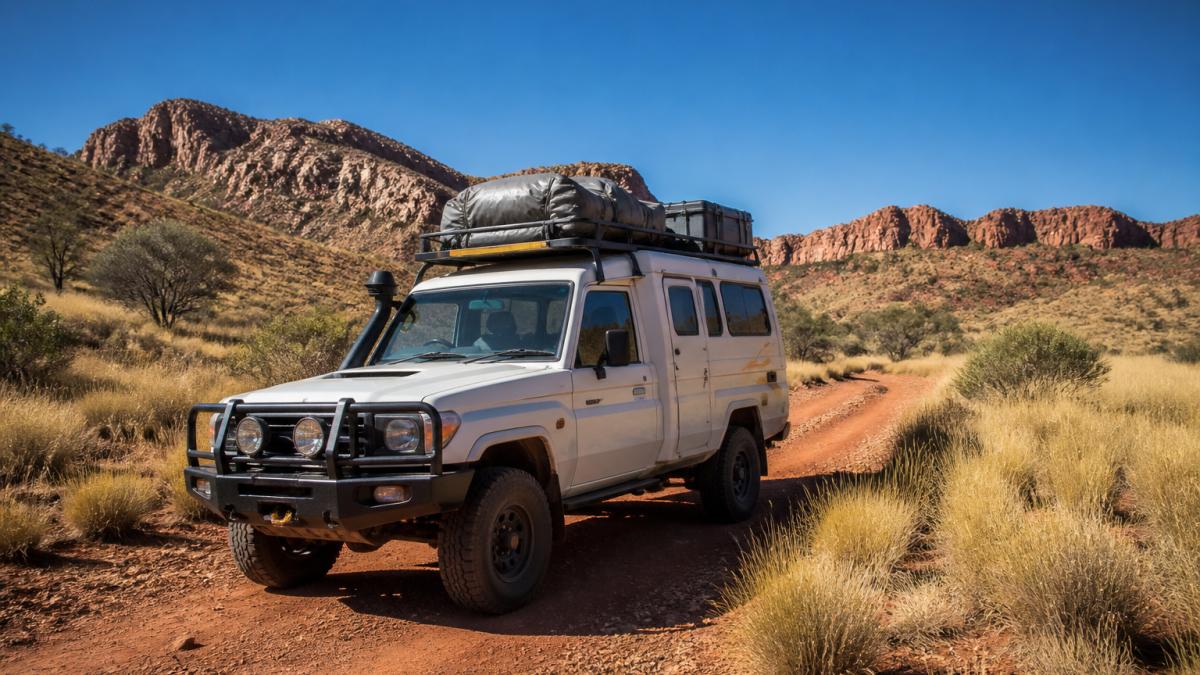
Your vehicle choice determines where you can safely travel. A standard 2WD sedan works for coastal routes and main highways, but remote outback driving demands a 4WD with higher clearance and the ability to handle corrugated and sandy tracks.
Self-drive vs campervan options
A self-drive rental gives maximum flexibility: you choose your route, timing, and accommodation, stop when you want, and change plans without penalty. It suits independent travellers who want to explore beyond established tourist routes.
A campervan provides accommodation, cooking facilities, and independence from advance campground bookings, which matters where accommodation is sparse. It also lets you camp in free or low-cost locations, reducing costs.
At Bonito Camper, we provide both options with vehicles specifically prepared for remote driving. Our 4WD campers include long-range fuel tanks, meaning fewer fuel stops in the outback, and equipment designed for gravel roads and rough terrain.
Essential vehicle maintenance checks
Before a long trip, inspect your vehicle thoroughly: tyre condition and pressure (underinflation wears tyres faster and increases fuel consumption), brakes, belts, hoses, and fluid levels.
If renting, confirm the maintenance schedule and breakdown procedure. Ask about tyre replacement coverage and roadside assistance in remote areas, since some companies exclude remote regions from their warranty.
Carry spare parts: fan belts, hoses, fuses, and jumper cables.
Outback Road Trip Safety and Remote Driving Procedures
Remote driving demands respect for the environment and realistic assessment of your capabilities. The outback is beautiful but unforgiving. Distances are vast, help is distant, and mistakes compound quickly.
Road conditions and live closure updates
Outback roads vary from sealed highways to corrugated dirt tracks to sandy creek crossings. Corrugated roads are passable in a standard vehicle if you reduce speed.
Before departing, check current road conditions. Live Road Closure Updates from Western Australia transport authority provides real-time information about closed routes, flood damage, and maintenance work.
Carry a detailed paper map and a GPS device with offline maps loaded.
Communication and emergency protocols
Establish a communication plan before departing. Leave your itinerary with someone reliable, including specific locations and dates, and check in at regular intervals.
Carry a satellite communicator (personal locator beacon or two-way satellite device) in truly remote areas.
Carry a first aid kit, extra water, and extra fuel: the rule of thumb is 50% more water and fuel than you think you’ll need.
2026 road rules and permits
Australian road rules are consistent across states, but some remote areas require permits or have restrictions.
Australian Road Rules and State-Specific Requirements provides current regulations. Carry your licence, vehicle registration, and proof of insurance.
Speed limits on outback roads are typically 100 km/h on sealed highways and 80 km/h on unsealed roads, though many drivers reduce speed further.
Remote Road Trip Packing List and Supplies
Packing for remote travel means preparing for self-sufficiency. You can’t run to a shop if you forget something, so planning is critical.
Water, fuel, and food planning
Water is non-negotiable: carry a minimum of 20 litres per person for a multi-day outback journey, covering drinking, cooking, and washing.
Fuel planning depends on your route: East Coast stations appear every 100-150 kilometres, while outback gaps of 200+ kilometres are common.
Food should be non-perishable and require minimal cooking. Tinned goods, pasta, rice, dried fruit, nuts, and biscuits are reliable.
Navigation gear includes paper maps, a compass, and a GPS device with offline maps.
Budgeting Your Road Trip: Costs and Accommodation
A realistic budget accounts for vehicle rental, fuel, accommodation, food, and activities. Costs vary widely depending on vehicle type, group size, and travel style.
Fuel, campgrounds, and one-way rental costs
Fuel is typically the largest variable cost. A 4WD on outback roads consumes 10-12 litres per 100 kilometres, so a 3-month trip covering 8,000-10,000 kilometres costs $2,000-3,500 in fuel alone.
Campgrounds range from free (some national parks and council areas) to $30-50 per night at commercial sites.
One-way rentals typically cost more than returning a vehicle to its origin, but the convenience often justifies it. Ask your rental company for specific pricing on your route.
Sightseeing and activity costs
National park entry fees vary by state: some charge per vehicle (typically $10-15), others per person, and some are free. Budget $200-400 for park fees over a 3-month trip, plus $50-150 per guided tour, boat trip, or adventure activity, totalling $1,000-2,000 for discretionary experiences.
Food costs depend on your cooking style: self-catering in a campervan costs $80-120 per week for a couple, rising to $150-200 with occasional eating out. Over 12 weeks, budget $960-2,400.
A realistic 3-month australia road trip planning budget for a couple runs $6,000-10,000 total, including vehicle rental, fuel, accommodation, food, and activities. Solo travellers spend slightly less; larger groups can negotiate better vehicle rates.
Booking and Logistics: Flexible Routes and Drop-Off Options
Book early during peak seasons (school holidays, winter months), when popular routes and vehicle types sell out 2-3 months ahead.
One-way rentals require advance notice, and not all companies offer remote drop-offs, so confirm availability before booking.
Booking accommodation in advance is unnecessary for most of the trip, since campgrounds rarely fill except during school holidays.
Consider travel insurance covering vehicle rental, trip cancellation, and emergency medical evacuation.
Planning an australia road trip in 2026 requires balancing ambition with a realistic assessment of distances, weather, and your group’s experience. Our fleet includes 4WD vehicles equipped for remote driving, with long-range fuel tanks and one-way rental flexibility, so you can explore at your own pace without returning to your starting point. Enquire now to discuss your route, dates, and vehicle requirements, we’ll help you plan a trip that becomes a genuine adventure rather than a rushed itinerary.
Frequently Asked Questions
How do I plan an Australia road trip itinerary that suits my travel style?
Start by identifying your travel duration, preferred regions (coastal, outback, or mixed), and key attractions. For a 2-3 week trip, choose one major route like the Great Ocean Road or East Coast. For longer journeys, combine multiple regions with realistic daily mileage (300-400 km). Consider seasonal weather, your vehicle type, and accommodation preferences (campgrounds, hotels, or campervans). Build flexibility into your itinerary to account for road closures, weather delays, and unexpected discoveries. Use a road trip planner tool or consult with a rental company familiar with current conditions.
What should I pack for a remote road trip in the outback?
Essential items for a remote road trip packing list include: at least 20 litres of drinking water per person, high-energy non-perishable food, a first-aid kit, a satellite communicator or personal locator beacon, a detailed map and GPS device, spare tyres and tools, jump leads, a high-visibility vest, sunscreen and hat, warm clothing for cold nights, and a torch with spare batteries. Check your vehicle’s fuel range and fuel stop locations beforehand. Carry recovery gear such as a snatch strap and sand ladders if driving 4WD tracks. Inform someone of your planned route and expected return date.
How long does it take to drive around Australia on a 3 month road trip?
A 3 month road trip around Australia typically covers 12,000-15,000 km, depending on your route and pace. If you drive 300-400 km per day on average with rest days, you can explore major regions: East Coast (Sydney to Cairns), Red Centre (Alice Springs, Uluru), Great Barrier Reef, and coastal drives. Most travellers spend 2-4 weeks in each region to balance driving time with sightseeing. Factor in seasonal weather (avoid tropical cyclone season November-April in the north) and book accommodation in advance during school holidays.
What are the key safety procedures for outback road trip driving?
Outback road trip safety requires: checking live road closure updates before departure, carrying a satellite communicator in areas without mobile signal, maintaining your vehicle to manufacturer standards, driving during daylight hours on unfamiliar tracks, carrying spare fuel and water, and informing a contact of your itinerary. Observe speed limits on gravel roads (typically 80 km/h), avoid driving at dawn or dusk when wildlife is active, and never drive alone in extreme heat. In 2026, ensure your vehicle meets current road safety standards and carry a copy of the Australian Road Rules. If stranded, stay with your vehicle and wait for assistance.
How much does a road trip around Australia typically cost?
Road trip costs vary by vehicle type, season, and travel style. Budget for vehicle rental, fuel (typically 8-12 litres per 100 km depending on terrain), campground fees (AUD 15-50 per night), food, and activities. One-way rental options may have drop-off fees depending on distance. Accommodation in campervans reduces costs compared to hotels. Seasonal pricing affects availability and rates; school holidays and peak season (May-September) are more expensive. Obtain a detailed quote from your rental provider that breaks down vehicle costs, insurance, and any park passes or permits required for your planned route.
When is the best time to plan and book a road trip?
Book 2-3 months in advance for peak season (May-September) to secure vehicle availability and preferred dates. For school holidays (April, July, December-January), book 4-6 weeks ahead. The best time to travel is May-September (cooler, drier weather across most regions) and March-April (mild temperatures, fewer crowds). Avoid November-April in tropical regions due to cyclone risk and extreme heat. Check seasonal road closures and weather forecasts specific to your chosen route before finalising your itinerary and booking your vehicle.
Do I need a special licence or permit to drive remote roads in Australia?
A standard Australian driver’s licence is required for most public roads. For national parks and some remote areas, check entry requirements: some parks require a park pass (many include free entry with campervan rental), and a few restrict access during certain seasons. High-clearance or 4WD vehicles may access tracks closed to 2WD vehicles. In 2026, verify current restrictions with the relevant state parks authority before your trip. International visitors must carry an International Driving Permit alongside their home licence. Always carry vehicle registration and insurance documents.