
Last Updated: October 26, 2026
Quick Summary
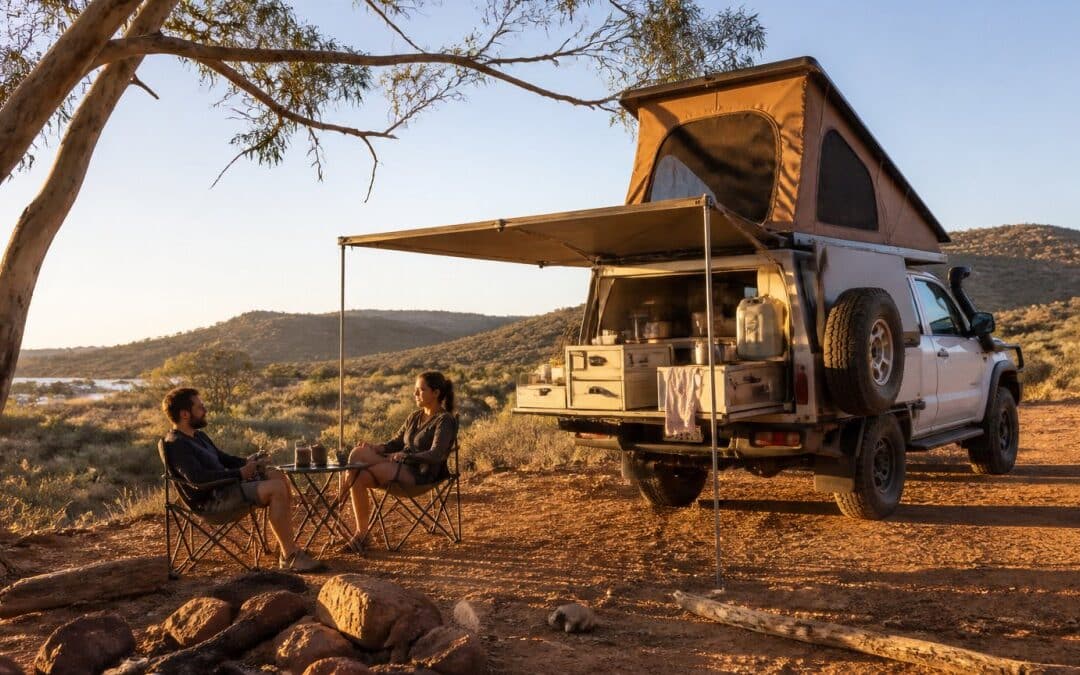
The best 4WD camper for outback travel is one built to handle corrugations, sand and long distances between fuel stops, with high ground clearance, compliant suspension, long-range fuel and water capacity, and self-sufficient solar power. Match the configuration to your route: pop-tops suit couples on formed dirt roads, hard-floor campers suit families base-camping, and slide-on tray-backs suit remote tracks and sand.
- Towing versus driving is the first decision, as it changes everything downstream.
- Check GVM, kerb weight and tow rating before falling for a layout.
- Plan 4-5 litres of water per person per day for drinking and cooking.
- Size solar at 1.5 to 2 times your calculated daily amp-hour draw.
- Keep a fuel safety reserve of at least 20 per cent on remote stretches.
Table of Contents
- What Makes a 4WD Camper Suited to Outback Travel
- Off-Road Camper Trailers: Towing Versus Driving
- Choosing a 4WD Campervan in Australia: Types and Configurations
- Camper Towing Capacity, Payload and Loaded Weights Explained
- Water, Power and Fuel Range for Remote Camping
- Your Outback 4WD Preparation Checklist Before You Leave
- Enquire About a 4WD Camper for Your Outback Trip
- Frequently Asked Questions
What Makes a 4WD Camper Suited to Outback Travel
The best 4WD camper for outback travel is a vehicle built to handle corrugations, sand and long distances between fuel stops without sacrificing the basics: a proper bed, water storage and a power system that doesn’t quit. At Bonito Camper, we’ve spent years helping travellers plan remote trips, and the difference between a good outback vehicle and a bad one rarely comes down to badge or budget.
Outback touring punishes weak points. Dirt roads shake loose anything that isn’t bolted down properly. Sand driving tests ground clearance and tyre choice. Long-distance travel between towns tests fuel range and water capacity. A camper that handles gravel roads comfortably can still struggle on a genuine 4WD track, so it pays to match the vehicle to the trip rather than the other way around.
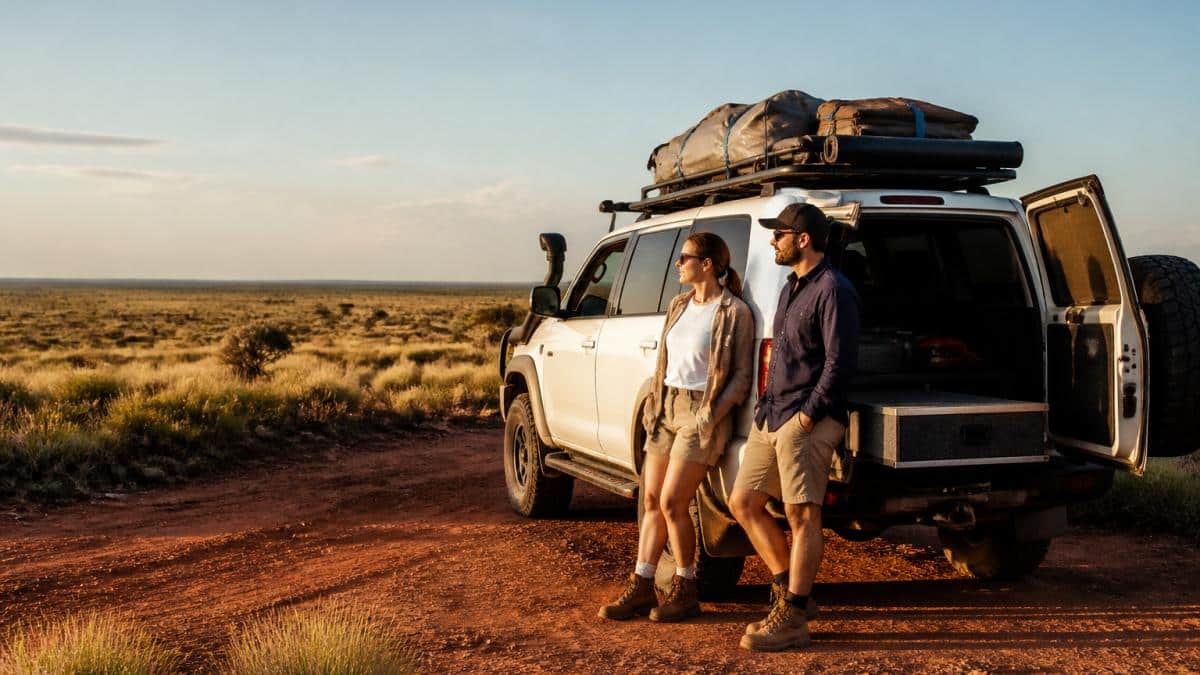
Four things separate an outback-ready camper from a coastal weekender:
- High ground clearance for rocky tracks and washouts
- A compliant suspension setup that survives corrugations without shaking the interior apart
- Long-range fuel and water capacity for remote stretches
- Self-sufficient power, usually solar and battery capacity, so you’re not reliant on powered sites
Get those right and the vehicle earns its keep. Get them wrong and you’ll spend the trip managing problems instead of enjoying the country.
Off-Road Camper Trailers: Towing Versus Driving
Towing versus driving is the first real decision, and it changes everything downstream. An off-road camper trailer gives you a base camp you can unhitch, more living space and often more water and power capacity. A drive-it-yourself 4WD camper keeps you mobile, simpler to manoeuvre on tight tracks and free of towing restrictions on the roughest terrain.
Towing performance matters more than brochures suggest. Ball weight, tow vehicle limits and how the trailer tracks on corrugations all affect how tiring a long day behind the wheel becomes. Trailers suit travellers who plan to stay put for several nights at a time. If your itinerary moves daily, or includes tracks where towing is impractical, a drive-it-yourself setup usually wins. You can see how a Landcruiser Bushcamper works as a tow-free alternative.
Choosing a 4WD Campervan in Australia: Types and Configurations
Camper configurations fall into three broad groups, and each suits a different kind of trip. The mistake most buyers make is choosing the layout they like on a showroom floor rather than the configuration that matches the terrain and the number of nights between resupplies. Compare the groups against the same five criteria, clearance and departure angle, payload left after water and fuel, sleeping capacity, amenity level, and how quickly you can pack up and move, and the shortlist usually narrows itself.
Pop-top and hi-top 4WD campervans. These balance comfort with reasonable clearance for gravel roads and national park access. The roof lifts or is fixed high enough to stand in, the bed is usually a fixed rear or roof platform, and the kitchen is often a slide-out. They suit couples or solo travellers doing mostly formed dirt roads with occasional rough sections.
Hard-floor and hybrid off-road campers. These favour space and amenities over agility. A hard-floor camper unfolds into a large living area with a proper bed, often a plumbed kitchen and sometimes a shower and toilet. They are the pick for families or travellers basing themselves somewhere for several nights.
Slide-on and tray-back setups. These prioritise rugged terrain capability and payload over interior comfort. A slide-on camper sits on a tray-back ute chassis, keeping the centre of gravity low and the departure angle usable on genuine 4WD tracks.
| Configuration | Best for | Clearance / agility | Payload pressure | Setup time | Amenity level |
|---|---|---|---|---|---|
| Pop-top / hi-top campervan | Couples, formed dirt roads, daily moves | Moderate | High, options eat payload fast | Fast | Moderate |
| Hard-floor / hybrid off-road camper | Families, base-camp style trips | Low to moderate when towing | High, ball weight and GVM | Slow | High |
| Slide-on / tray-back | Remote tracks, sand, rock, tight terrain | High | Moderate, low CoG helps | Fast | Basic to moderate |
The right 4WD campervan for Australia depends on your route, not your wish list. If you want to compare the full spread of 4WD camper options, start with layout and sleeping arrangements, then work backwards to vehicle capability. For a specific outback-capable build, the Toyota Trailblazer is worth a look.
Before you fall for a layout, load the vehicle’s GVM, kerb weight and tow rating into a spreadsheet and subtract full water, full fuel, passengers and recovery gear. The configuration that survives that sum is the one worth test-driving.
Camper Towing Capacity, Payload and Loaded Weights Explained
Payload and weight limits are where well-intentioned trips go wrong. Every vehicle has a gross vehicle mass, a towing capacity and a ball weight limit, and loading up with water, fuel, food and gear eats into payload fast. Exceed those limits and you compromise handling, braking and, in some cases, insurance cover. Managing this extra mass often requires caravan suspension upgrades to ensure the chassis can withstand the sustained stresses of corrugated outback tracks without failing.
Work through the numbers before you pack:
- Check the vehicle’s gross vehicle mass and kerb weight
- Subtract kerb weight from GVM to find real payload
- Weigh your water and fuel at full capacity (one litre of water weighs one kilogram)
- Add passengers, food, gear and recovery equipment
- Confirm ball weight stays within the tow vehicle’s limit if towing
If the sums get tight, our FAQ covers the practical questions on weights and specs before you commit.
Water, Power and Fuel Range for Remote Camping
Remote camping runs on three resources: water, power and fuel. The difference between a comfortable trip and a rationing trip is whether you sized each one against a realistic daily consumption figure rather than a gut feel. The method below is the one most experienced remote travellers use, and it works for any vehicle.
Step 1, Estimate daily water use per person. A common planning figure is 4-5 litres per person per day for drinking and cooking, plus 3-5 litres per person per day for washing and dishes if you are not using campground facilities. That puts a couple at roughly 15-20 litres per day. A 100-litre tank therefore gives about five to seven days between refills, less if you shower daily or cook with more water. Carry a separate 20-litre jerry of drinking water so a tank contamination or leak does not become an emergency.
Step 2, Size battery and solar around worst-case weather. Work out your daily amp-hour draw first: a 12 V fridge typically cycles between roughly 20 and 50 Ah per day depending on ambient temperature and how often it is opened, lighting and phone charging add a few more, and an inverter or diesel heater adds significantly more. Then size solar to replace that draw on a cloudy day, not a perfect one.
Step 3, Treat fuel range as a hard limit. Calculate usable range from tank capacity, a realistic consumption figure for loaded dirt-road driving (which is materially worse than highway consumption), and a safety reserve of at least 20 per cent. Long-range tanks and jerry cans extend range, but they also add weight that eats payload and increases consumption, so the calculation is circular and worth doing twice.
| Resource | Planning figure | Worked example (2 people, 7 days) |
|---|---|---|
| Water | 4-5 L/person/day drinking + cooking; 3-5 L/person/day washing | 15-20 L/day → 105-140 L for the week |
| Power | Fridge 20-50 Ah/day + lights/charging; solar 1.5-2× daily draw | ~40 Ah/day draw → 60-80 Ah/day solar replacement |
| Fuel | Loaded dirt-road consumption + 20% reserve | Range must cover longest gap between stops |
These are planning estimates, not guarantees. Consumption rises in sand, into headwinds and with a loaded roof rack, and water use rises in hot weather. Build in margin and carry a backup for each resource, a jerry can, a portable solar blanket and a spare water container.
Plan conservatively. Carry more water than you think you need, size battery capacity around worst-case cloudy weather, and treat fuel range as a hard limit rather than an estimate. Long-distance travel through remote country rewards the traveller who over-prepared and never needed it.
Your Outback 4WD Preparation Checklist Before You Leave
Preparation is the cheapest insurance on any outback trip. Work through this before departure:
- Vehicle serviced and tyres checked, including the spare
- Recovery gear packed: maxtrax, shovel, compressor, snatch strap
- Spare parts and basic tools for common failures
- Water and fuel topped up for the longest remote stretch
- Emergency communication sorted beyond mobile coverage
- Route planned with fuel stops and access restrictions noted
- National park passes and permits arranged
A common mistake is treating servicing as a formality. On corrugated dirt roads, a vehicle that wasn’t properly checked beforehand is the one that fails. Reliability planning and a recovery plan matter as much as the vehicle itself.
Enquire About a 4WD Camper for Your Outback Trip
The right vehicle makes remote travel feel achievable rather than risky. Bonito Camper is a family-owned operation, and we equip our vehicles for exactly this kind of trip: well-maintained 4WDs with long-range fuel tanks for fewer stops, no advertising on the vehicles, flexible one-way drop-off and a complimentary park pass for unlimited entry to Western Australia’s parks. Tell us your route and dates, and we’ll help you match the vehicle to the journey.
Frequently Asked Questions
What features should a 4WD camper have for remote trips?
Look for high ground clearance, a proper low-range transfer case, all-terrain tyres and a long-range fuel tank before anything else. After that, check payload: water tanks, solar and battery capacity, a fridge and recovery gear all add kilograms fast. A camper with a 200Ah battery system, 80 to 100 litres of water and a 130-litre fuel tank will cover most remote stretches without resupply. Confirm the gross vehicle mass leaves room for passengers, luggage and food.
Can a 4WD camper handle corrugated and unsealed roads?
Yes, if it is built for it. Corrugations punish suspension, so look for upgraded shocks, adequate tyre sidewalls and a chassis rated for loaded weights. Reduce tyre pressures on dirt (typically 20 to 25 psi depending on load and tyre type) and keep speeds moderate. Check wheel bearings, suspension mounts and roof rack bolts regularly on long dirt sections. A well-maintained 4WD camper handles gravel and corrugations comfortably; a standard van or soft-roader will not.
Is a campervan or an off-road camper trailer better for outback travel?
It depends on how you travel. A 4WD campervan is quicker to set up, easier on tight tracks and simpler to reverse, which suits couples moving daily. Off-road camper trailers carry more water and storage and let you base-camp while unhitching, but they add towing weight, ball weight and fuel use. For remote routes with soft sand or narrow tracks, a campervan usually wins. For extended stays in one spot with a family, a trailer can be the better fit.
What should you check before taking a 4WD camper on a remote track?
Run through an outback 4WD preparation checklist: tyre pressures and spare condition, recovery gear including maxtrax, snatch strap and shovel, water and fuel reserves, battery and solar charging, first aid, and a communication plan. Check the vehicle’s servicing schedule and confirm the rental provider covers remote-area breakdown support. File a trip plan with someone reliable, carry a personal locator beacon, and know your fuel range between stops before you leave.
Planning a remote trip raises practical questions, from weights and payload to availability during school holidays. Enquire now and our team will walk you through availability, vehicle specs and what suits your itinerary. Get started with Bonito Camper and head into the outback with a vehicle built for it.
